Colorado rewards travelers who look past the postcard version of the state. Yes, the ski mountains are world famous. Yes, Denver is an easy gateway. But the real pleasure of traveling here comes from how quickly the landscape and mood can change: a live-music night under red sandstone, a morning hike around an alpine lake, a soak in mineral water after a cold day outside, or a road trip that runs from high passes to vineyard country and old railroad towns. The official state tourism office highlights just how broad that menu is, with 28 ski resorts, roughly 39,000 miles of hiking trails, dozens of hot springs, and a remarkable spread of certified dark-sky destinations.
That range is what makes Colorado such a strong first-trip destination, and an even better second-trip destination. A first visit might stitch together Denver, the Rocky Mountain National Park, and one mountain town. A second trip can go deeper: the San Juan Mountains by historic train, leaf season on a scenic byway, shoulder-season days in Boulder and the Front Range, or a slow circuit built around craft coffee, hot springs, and local festivals. The smartest Colorado itineraries are not about checking off famous names. They are about combining altitude, culture, weather, and pace in a way that feels right for you.
Colorado in Four Seasons
Winter: Big-Name Skiing and Quieter Rituals
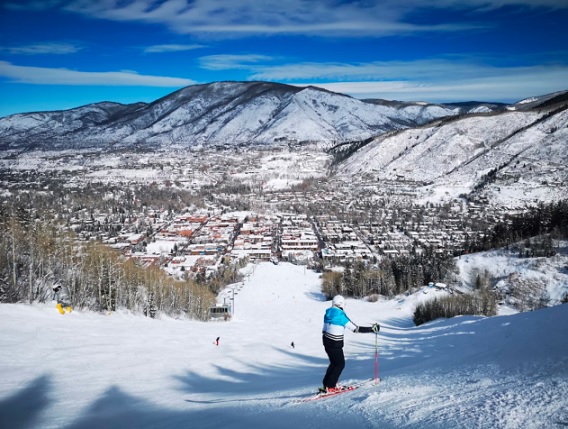
Winter in Colorado works for very different kinds of travelers. There are the classic resort loyalists who want Aspen, Vail, or Breckenridge for long lift days, polished villages, and the full high-country atmosphere. Then there are travelers who want something quieter: a less hurried ski area, a snowshoe trail through pines, a fireside dinner, and a late soak in geothermal water while cold air hangs over the valley. Colorado’s winter draw is not just the skiing itself. It is the rhythm of the day: bright morning light on the slopes, dry mountain air, and evenings that feel earned rather than scheduled. The state tourism office points travelers toward both marquee winter resorts and the year-round hot springs network that pairs so naturally with a ski day.
For first-time winter visitors, this is the season to stay flexible and realistic. A trip feels smoother when you base yourself in one area instead of chasing too many resorts. Denver also makes a surprisingly useful winter first stop: it helps many travelers adjust before going higher, and it offers museums, breweries, and concerts if the weather shifts your plans. That is often the difference between a frantic ski holiday and a balanced Colorado winter trip.
Spring: Shoulder Season, Fewer Crowds, Better Breathing Room
Spring is for travelers who enjoy space. In Colorado, late March through May can bring a softer, less crowded version of the state. Higher elevations may still hold snow, but lower foothill trails begin to open up, wildlife watching gets more rewarding, and the cities feel lively without peak-summer pressure. Denver and Boulder are particularly good in spring for a long weekend built around patios, art, easy hikes, and day trips rather than nonstop logistics. Colorado’s official travel guidance specifically points to spring as a season of fewer visitors, warmer resort weather, and a lingering edge of winter in the mountains.
This is also a strong season for travelers returning to Colorado for a second look. Instead of trying to “do the mountains,” you can build a trip around transitional landscapes: red-rock parks near Denver, lower-elevation hikes, farm-to-table dinners, and a couple of relaxed nights in a college-town or mountain-town setting. Spring in Colorado is not about spectacle every hour. It is about breathing room, easy detours, and the sense that the state is waking up around you.
Summer: High Country Energy
Summer is when Colorado turns expansive. Alpine lakes thaw out, rafting season kicks up as snowmelt fills the rivers, and small towns begin stacking calendars with music, food, and outdoor events. Rocky Mountain National Park becomes a major anchor for first-time visitors, but summer also reveals why Colorado is so easy to road-trip: there are scenic byways in nearly every direction, and the route between destinations is often part of the experience rather than dead time. Colorado’s rafting season begins each spring as mountain snow feeds the rivers, while the state’s scenic byway network remains one of the richest in the country.
The practical reality of summer is that Colorado rewards early starts. Trailheads fill. Mountain weather can turn quickly. National park access requires more planning than many visitors expect. In Rocky Mountain National Park, timed-entry reservations return in the 2026 warm season, including stricter time windows for the Bear Lake Road corridor, so a “show up and see what happens” strategy is not always the right one. But when you plan well, summer here feels generous: long daylight, cold rivers, late dinners, and those dry, golden evenings when a mountain town suddenly feels like the best place in America to be.
Fall: Colorado at Its Most Cinematic
Fall is the season that persuades many travelers to come back. Aspen groves turn gold, days can still feel warm in the sun, and nights sharpen just enough to make a sweater and a whiskey feel like part of the landscape. Colorado’s fall road trips are especially strong because the state has both the colors and the road infrastructure to support them. Scenic byways let travelers move slowly through mountain passes, historic towns, and canyon country without feeling rushed. Official byway guidance notes that Colorado has 26 scenic and historic byways, with more nationally designated byways than any other state.
For hikers, fall often feels better than summer. Trails are quieter. Midday heat is less intense. Towns still have enough activity to feel lively, but not so much that every dinner requires a battle plan. This is an ideal season for travelers who care as much about mood as they do about attractions: a roadside bakery before a pass drive, a short hike through yellow leaves, a brewery stop before sunset, then a crisp walk back to your hotel with the smell of wood smoke in the air.
Where Adventure Meets Culture
One of Colorado’s best tricks is that it rarely makes you choose between outdoor effort and cultural life. In towns like Telluride, Crested Butte, and Steamboat Springs, the active day folds naturally into the social evening. You can spend the morning on a trail or ski run, take a slow lunch with mountain views, then end up in a gallery, a small music venue, or a brewery where everyone still looks a little windburned from being outside. Colorado’s creative-district network and festival calendars show how deeply art, music, and performance are woven into places travelers often think of only as adventure bases.
Telluride is a good example of that balance. It is visually dramatic, but what makes it memorable is the texture of a day there: coffee before the gondola, an afternoon walk, and then a town-scale cultural scene that punches far above its size. Steamboat has a similarly layered feel, with major arts organizations and performance programming that add depth to a stay built around skiing, riding, or summer trails. These places feel lived-in, not manufactured.
Denver, meanwhile, works best not as a stopover but as a base with its own momentum. The city’s appeal lies in the mix: art districts, food halls, neighborhood breweries, pro sports, and the constant possibility of ending the day at Red Rocks. VISIT DENVER frames the city exactly this way, as a place where craft beer, live music, outdoor recreation, and big-event energy all sit close together.
After a Rockies, Nuggets, or Avalanche night, some travelers retreat to a downtown hotel or mountain lodge and keep the sports mood going by checking international fixtures and odds on melbet, especially when a major football or cricket event is happening in another time zone. In Colorado, that kind of quiet evening ritual fits naturally beside more classic downtime options such as a local pint, a late dessert, or a view from the balcony over the lights of town.
Historic Colorado adds another layer. Railroad journeys, former mining settlements, and preserved downtowns give the state an Old West backbone without reducing it to a costume. You feel it in places where the buildings still carry the geometry of boomtown streets, and in trips where the day’s highlight is not a summit but an old train curving through canyon walls. That combination of motion, history, and scenery is one reason Colorado trips linger in the mind.
Signature Colorado Experiences That Elevate Your Trip
Soaking in Hot Springs After the Cold
Colorado’s hot springs are more than wellness add-ons. They are part of the state’s travel grammar. After a ski day, a long hike, or even a long drive, sinking into mineral water changes the mood of a trip. Colorado’s tourism office currently highlights about 30 hot springs around the state, from large classic resorts to smaller heritage properties. Best for: winter travelers, couples, and anyone building recovery time into an active itinerary.
Riding a Scenic Historic Train
Colorado is one of those rare places where a train ride still feels dramatic rather than nostalgic. The Durango & Silverton Narrow Gauge Railroad runs through the San Juan Mountains along the Animas River, while the Royal Gorge Route threads through granite canyon walls with meal service and multiple daily departures. Best for: families, photographers, and travelers who want scenery without another long drive.
Seeing a Concert at Red Rocks
Plenty of destinations claim to have iconic venues. Red Rocks actually earns the word. The setting alone is enough: sandstone walls, open sky, and that feeling of watching a show in a place that already had a presence before the stage lights came on. The venue’s 2026 calendar remains packed, which is exactly why it works so well as the centerpiece of a Colorado trip. Best for: music travelers, couples, and city-plus-mountains itineraries based in Denver or Golden.
Stargazing in Dark-Sky Country
Colorado nights can be astonishingly clear once you get away from the city glow. DarkSky Colorado reports that the state had 20 certified dark-sky places as of January 2026, making it one of the strongest stargazing destinations in the country. This is not only for dedicated astronomy fans. It is for travelers who want one quiet, unforgettable night: a blanket, a thermos, and a sky that feels suddenly bigger than the day. Best for: road-trippers, photographers, and anyone staying in rural mountain or mesa country.
Rafting the Colorado River
Rafting gives summer trips a different kind of memory: colder, louder, more kinetic. Colorado’s rafting season is tied directly to spring and early-summer snowmelt, which means the rivers carry the energy of the mountains into the warmer months. Whether you choose a mellow float or a more adrenaline-heavy run, rafting changes the scale of the landscape. Best for: active families, friend groups, and travelers who want one day that feels vividly physical.
Eating and Drinking Like You Are Actually in Colorado
A better Colorado trip usually includes more local flavor and less generic convenience. That means mountain-town coffee roasters, brewery stops timed to late afternoon, regional spirits, and dinners that lean into Colorado produce, beef, trout, or seasonal ingredients. Denver is especially good for this because food halls, breweries, and neighborhood dining give visitors options without requiring formal planning every night. Best for: urban travelers, food-focused couples, and anyone who wants a trip to feel rooted in place rather than interchangeable.
Planning Your Colorado Itinerary: Practical Tips
Colorado is easier to enjoy when you plan in combinations, not in checklists. A strong first itinerary might be Denver for acclimatization and culture, one classic mountain base for scenery or skiing, and one more remote or slower area for contrast. Think Denver plus Breckenridge plus Glenwood Springs. Or Denver plus Rocky Mountain National Park plus Steamboat. Or, for a deeper second trip, Grand Junction or Durango with a byway loop and a train ride.
A few practical habits make a real difference:
- Treat day one as an altitude day. Drink more water than usual, go easy on alcohol, and scale back exercise until you know how your body responds. Denver’s own high-altitude guidance recommends hydration, layers, sun protection, and reduced exertion at first; Colorado tourism guidance also advises resting at lower elevation before heading higher.
- Decide early whether your trip is car-first or base-first. A rental car opens up scenic byways, small towns, hot springs, and trailheads. A city-plus-resort trip can work with less driving, but once you want flexibility, a car matters.
- Pack for contrast, not just forecast. Colorado sun is strong, temperatures swing fast, and one day can move from dry heat to wind to evening chill.
- Book early for peak periods. Summer national park visits, prime fall weekends, and Red Rocks shows all reward people who plan ahead. Rocky Mountain National Park’s timed-entry system is the clearest example.
Downtime matters too. On rest afternoons in a rental cabin, during a storm pause, or after a long transfer day into the state, some travelers mix offline and online entertainment rather than trying to wring maximum activity out of every hour. A little digital escapism, even a few spins on bd casino, can sit perfectly well beside a slower Colorado evening built around takeout, route planning, and an early bedtime before the next trail or drive.
Local Products, Gear, and Little Extras That Make Colorado Trips Better
Colorado trips feel better when you respect the environment instead of fighting it. Good layers are not optional here. Neither are sturdy shoes, lip balm, sunglasses, sunscreen, and a serious water habit. The state’s dryness and altitude make small oversights feel bigger by the second day. That is why even short, style-conscious trips tend to become gear-aware trips. A light shell, a warm midlayer, and shoes that can handle gravel, slush, or sudden rain will do more for your holiday than another outfit option.
The same principle applies to road-trip food and recovery. Travelers quickly learn the value of good local coffee, compact snacks, chocolate, jerky, fruit, and picnic supplies that live in the car or daypack. Then there is the recovery layer: spa appointments, yoga classes, massage, and of course hot springs. In Colorado, those are not luxuries pasted onto the trip. They are part of how people travel well here, especially when they are stacking long drives, hikes, skiing, and high elevation across several days.
In the end
Colorado is at its best when you stop treating it as a single-theme destination. It is not only a ski state. Not only a summer hiking state. Not only a place to fly into, photograph, and leave. It is a state of combinations: city energy and alpine quiet, train rides and trailheads, live music and dark-sky silence, cold rivers and hot springs, famous stops and small detours.
Plan that way and the trip opens up. Choose a season that matches your pace. Pair one iconic place with one less obvious one. Leave room for weather, appetite, and surprise. Colorado is generous to travelers who build for experience rather than bragging rights, and that is exactly why so many people leave already imagining how they would do it differently next time.