
Sambalpur is a vibrant city located in western Odisha and the district headquarters of Sambalpur district. The city boasts a vibrant cultural heritage, beautiful natural surroundings, and historical significance as home to the Mahanadi River. Nestling among dense woodland and encircling hills, Sambalpur is a tourist hotspot of the state that holds a fine balance between ancient traditions and modern development.
The Sambalpur district is spread over 3,141 square kilometers and has a tropical climate. The traditional Sambalpuri sarees with beautiful ikat weaving patterns are especially popular here. As the home to more than 300,000 residents, the city is a living mishmash of tribal traditions and urban life.
Why Sambalpur is Famous for Tourism
Sambalpur Tourists encourage to visit historical temples, natural beauty and engineering marvels. A major attraction is the gigantic Hirakud Dam, which ranks among the longest earthen dams in the world.
The city has a rich tradition of culture and arts. Dalkhai and Sitalsasthi Festival are Folk dances that reflect cultural richness of the region. The tourism appeal of the city is further enhanced by Sambalpuri music, handloom textiles and tribal heritage.
History and Cultural Significance
Sambalpur is an ancient city and its history can be traced back to the Chauhan Dynasty of Sambalpur which ruled over the region in 14th century. It was later ceded to the Marathas and finally the British Empire. Sambalpur continued to be a princely state till 1948, when it merged into independent India.
The city took its name from the famous Samaleswari Temple which is dedicated to Goddess Samaleswari. It has the importance of religion and is considered as the principle place of worship of this city. Sambalpur is also noted for its Kutra-style architecture, handloom weaving traditions and festivals that honour the harmonious link between tribal settlements and nature.
Sambalpur Tourist Places List
| Attraction | Key Feature | Distance from City Center |
|---|---|---|
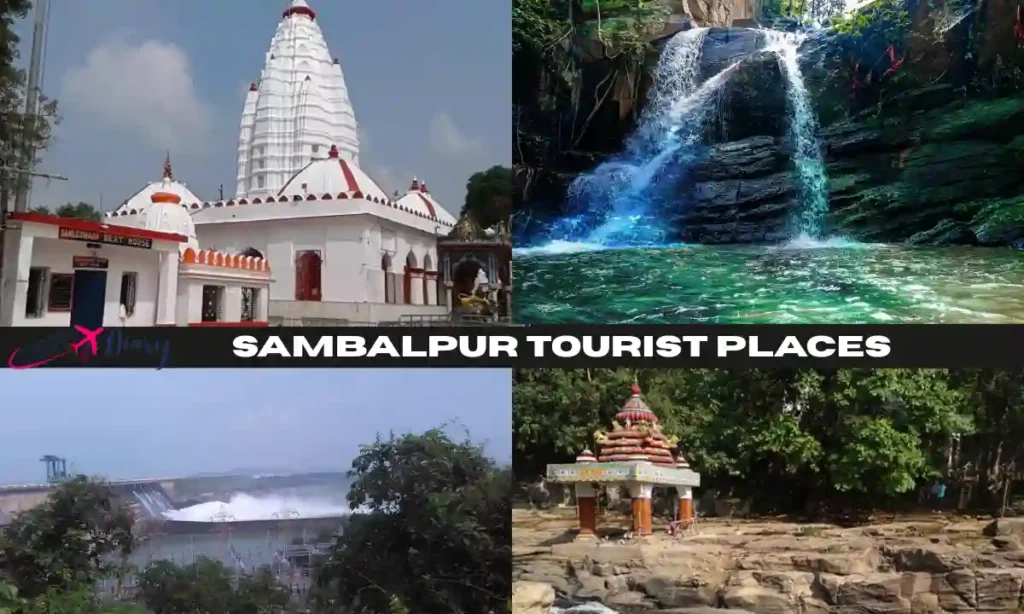
| Hirakud Dam | World’s longest earthen dam, boating views | 15 km |
| Samaleswari Temple | Ancient shrine dedicated to Goddess Samaleswari | Central |
| Leaning Temple of Huma | 17th-century tilted Shiva temple | 25 km |
| Nrusinghanath Temple | Hilltop Narasimha temple with trekking trails | 35 km |
| Ghanteswari Temple | Temple decorated with thousands of bells | 35 km |
| Debrigarh Wildlife Sanctuary | Wildlife reserve with safari options | 50 km |
| Ushakothi Wildlife Sanctuary | Nature park with deer and bird species | 40 km |
| Gautam Dhara Waterfall | Forest waterfall and trekking spot | 30 km |
Famous Temples in Sambalpur
Sambalpur has many temples, and Samaleswari Temple is the most widely-known temple which forms the cultural and spiritual cradle of Sambalpur. The temple is visited by devotees across the year to worship the black stone idol of Goddess Samaleswari and partake in religious festivals.
The Leaning Temple of Huma, which is dedicated to Lord Shiva, is another uncommon attraction. This temple is remarkable, as its structure leans at an angle of about 13 degrees without any structural damage. The other temples are Nrusinghanath Temple and Ghanteswari Temple, both popular for their serene surrounds as well as religious value.
Natural Attractions
The Hirakud Dam, which forms a spectacular reservoir that is home to over 200 species of birds, is the most stunning natural treasure in Sambalpur. Visitors often like to birdwatch, photograph and picnic around the reservoir.
The natural beauty of the surrounding forests and hills。 Explore nature and see wild animals in their natural habitat at wildlife areas like Debrigarh Wildlife Sanctuary, Ushakothi Wildlife Sanctuary etc.
Waterfalls and Scenic Spots
There are many beautiful waterfalls and scenic places in around Sambalpur region. One of the most visited is Gautam Dhara Waterfall, set among forested hills and accessible via a short trek to the waterfall.
Leaning Temple of Huma, is another scenic place where visitors can get a glimpse of the panoramic view of Mahanadi river. Connected by the Hirakud reservoir, Cattle Island is another ideal getaway for nature lovers and hosts several species of migratory birds, along with pristine green cover.
Wildlife and Nature Parks
Wildlife enthusiasts can venture into Debrigarh Wildlife Sanctuary, an expanse of about 346 square kilometers of land that’s home to tigers, barking deer, wild boar and numerous species of birds. There are jeep safaris, boat rides and guided nature trails to enjoy within the sanctuary.
Wildlife Sanctuary is another significant wildlife abode famous for dense forests, blackbucks, leopards and more than 150 species of birds. Lankan wildlife parks are crucial to the eco-tourism in the area.
Top Tourist Attractions
In addition to the multiple attractions, Hirakud Dam is known as one of the most famous landmarks in Sambalpur district because of its 26 km stretch and scenic viewpoint. Samaleswari Temple’s spiritual environment lures thousands of pilgrims every year.
Among its attractions are the architectural marvel of the Leaning Temple of Huma, as well as Debrigarh Wildlife Sanctuary for wildlife safaris, and traditional handloom markets where tourists can buy gold-standard Sambalpuri weaves.
Best Time to Visit
The optimal period for travelling in Sambalpur is from October to March when weather conditions are favourable with temperatures between 15°C and 30°C, which makes it perfect for sightseeing, wildlife adventure and involvement in cultural fairs.
The waterfalls and scenery are more visible but travel may be impacted by heavy rainfall in the region from June to September during monsoon season. From April through June, the summer can be very hot and humid.
How to Reach
Sambalpur is well connected to major Indian cities by air, rail, and road.
By Air:
The nearest airport is Veer Surendra Sai Airport, located about 20 km from the city. The airport offers flights to cities like Delhi and Mumbai.
By Rail:
Sambalpur Junction Railway Station is a major railway hub with trains connecting to many major cities across India.
By Road:
Sambalpur is connected by National Highway 53, linking the city with Raipur (300 km) and Bhubaneswar (350 km). Regular buses and taxis operate along these routes.
Travel Tips for Tourists
Visitors to Sambalpur must properly plan the trip for maximum experience. Pre-booking is advised and prefer accommodation near Hirakud Dam or eco-resorts near wildlife sanctuaries. Travellers must carry mosquito repellents, comfortable clothing and light woolens for chilly evenings.
When visiting religious sites, visitors should observe temple dress codes; for trekking and wildlife tours, local guides aren’t only a great way to learn more about your surroundings, they’re also the safest option. Do visit the local markets for Sambalpuri handloom products.
Conclusion
Sambalpur is an intriguing place that encompasses the dimensions of culture, history, spirituality, and natural beauty. Visiting few local attractions such as the famous Hirakud Dam, ancient temples, wildlife sanctuaries and waterfalls ensures an unforgettable travel experience.
With a unique offering for each and every visitor, be it the nature lovers or history buffs or spiritual travellers, Sambalpur semaphorizes into one of the most interesting destinations in western Odisha.
Also read about: Palakkad Tourist Places: How to Reach, Travel Guide & Best Time to Visit