

A suit on a business trip is a logistics problem disguised as a fashion problem. Lose 10 minutes to re-pressing in a hotel bathroom and you have already spent more on the convenience than a decent garment bag would have cost. Lose a meeting because the lapel will not lie flat and the cost goes up sharply. The question for any business traveler is which carrying method actually keeps a suit ready to wear at the other end – and there are really only three options worth considering.
This guide breaks down each method with the trade-offs that matter, then closes with a comparison reference for quick decision-making.
The Three Real Options for Suit Travel
Suit travel falls into three distinct carrying categories:
- Dedicated garment bag – hangs the suit at full length, usually with a fold for transit. Best for formal travel; weakest for compact packing.
- Garment duffel – a hybrid that opens flat to lay the suit, then closes into a duffle for hand-luggage limits. The middle-ground option; covered in detail below.
- Pack-and-press in a regular bag – rolling the suit into a normal weekender or carry-on, with the assumption that re-pressing happens at destination.
The right choice depends on how often you fly with a suit, how formal the occasion is, and how much you value bag-versatility versus single-purpose protection.
Option 1: A Dedicated Garment Bag
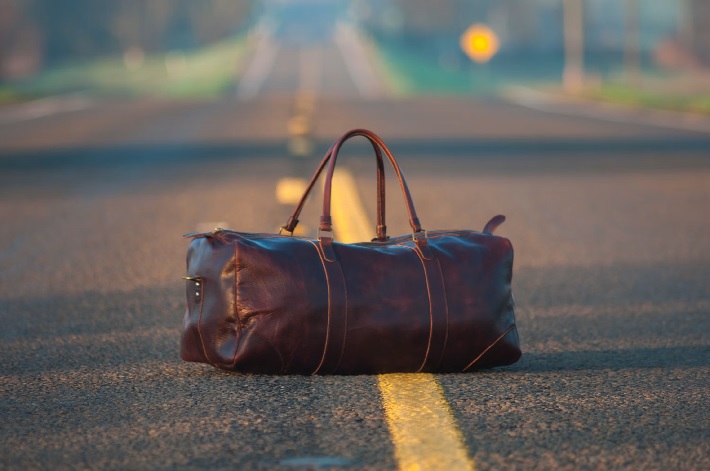
A traditional garment bag carries the suit at near-full length, folding once across the middle for transit. This is the gold standard for keeping a jacket’s shoulder line intact and creases sharp, but it brings structural trade-offs:
- It is only a garment bag – it cannot double as a weekend bag, gym bag, or laptop carrier
- Most airlines treat it as a separate piece on top of carry-on, occasionally requiring overhead-locker negotiation
- Heavier examples (leather, structured construction) become noticeable on a long airport walk
Worth it for: lawyers, consultants, sales professionals, and frequent business flyers carrying suits to high-stakes meetings 5-plus times a year.
Option 2: A Garment Duffel (Middle Ground)

Garment duffels are the compromise option. They open flat for the suit to lay across (held by an integrated hanger or fold-pocket), then zip closed into a duffle shape that respects most carry-on dimensions. Construction varies considerably across brands – and the variation matters more than the marketing suggests.
Industry guides on garment-bag construction, such as Von Baer‘s comparison of leather versus nylon materials, walk through the structural trade-offs in detail. The short version: nylon bags fold compact and weigh less, but the soft material allows shoulder rolling on long-haul flights; leather and structured materials hold the shoulder line better but add weight and cost. There is no universally right answer – the call tracks how often you fly with a suit and how much shoulder-shape preservation matters to your work.
The middle-ground appeal is structural, not just aesthetic. A garment duffel:
- Gives the suit a flat carrying position (no folds beyond the unavoidable transit fold)
- Doubles as standard hand luggage for shoes, toiletries, a charger, and an extra shirt
- Avoids the separate-piece airline argument that dedicated garment bags sometimes trigger
- Suits travelers who fly with a suit 5-10 times a year – frequent enough to want protection, infrequent enough to value the dual-purpose
Worth it for: business travelers carrying a suit on roughly half their trips, travelers prioritising carry-on-only setups, and anyone who needs the bag to do double duty when not carrying a suit.
Option 3: Pack-and-Press in a Standard Bag
The most compact option uses no specialised bag at all. The suit is folded carefully into a regular weekender or carry-on, with a planned re-pressing at destination.
The technique:
1. Lay the jacket face-down, smooth the lining
2. Fold one shoulder inside-out into the other (the standard hotel-pressing fold)
3. Lay the trousers flat on top, folded along the existing crease line
4. Pack soft items (t-shirts, knitwear) above and below to cushion
5. Plan on either steam, hotel iron, or a 15-20 minute hang in a steamy bathroom on arrival
Worth it for: short trips with single-day suit wear, travelers with reliable steam-iron access at the destination, and anyone whose meeting timeline allows for a 30-minute re-press.
Repeated folding has measurable effects on the fabric itself: textile research has shown that wool’s crease-recovery angle declines progressively with each cycle of fold-and-recovery (source). For a suit you will wear once, this is rarely an issue; for the same suit packed-and-pressed across a multi-city trip, the cumulative folding shows up in the lapel and trouser break.
How to Pack a Suit Cleanly
Across all three options, the pre-flight prep matters more than the bag:
- Empty the pockets entirely. Coins and keys stretch fabric over a long-haul.
- Remove the suit from any plastic dry-cleaner cover before packing. Plastic traps moisture.
- Pack the trousers folded on the existing crease, not flat. A new crease elsewhere is harder to remove than the existing one.
- Lay shoes in a separate compartment or shoe bag. Polish transfers easily to suit fabric.
- Use a hanger that holds the shoulder shape. Wire hangers compress; padded shoulder hangers preserve.
Best Time to Buy a Travel Suit Bag
Garment-bag pricing is broadly stable year-round. The category does not run heavy promotional cycles compared to mainstream luggage. The decision-driver is usage volume, not seasonal pricing – if you are flying with a suit four times in the next year, the bag pays back on the first or second trip in re-pressing time saved.
FAQ
Can I use a garment bag as my only carry-on?
Generally no on most airlines – garment bags are usually counted as a separate piece on top of carry-on. Garment duffels are more often accepted as the single carry-on item.
How long can a suit stay folded in a garment bag before creasing?
A well-constructed wool suit holds shape for 24-48 hours folded in a quality garment bag. Beyond that, hang or steam on arrival.
Are leather garment bags worth the weight?
For frequent flyers (10-plus suit trips per year), yes – structured materials preserve shoulder line better than soft alternatives, and full-grain leather develops character with use. For occasional travel, lighter materials are practical.
Should I check a suit or carry on?
Carry on whenever possible. Checked baggage handling involves random orientation changes that defeat any folding plan.