

Tipu Summer Palace, situated in the populous city of Bangalore, Karnataka, is one of the most famous historical landmarks in India. Tipu Summer Palace, constructed in the late 18th century, was used as a summer palace of Tipu Sultan, commonly known as the Tiger of Mysore. The palace is famous for its wooden architecture and historical significance and provides an insight into the lives of the royal family of Mysore.
If you are considering a visit, here is a comprehensive list of the top 5 things you cannot miss in Tipu Sultan’s Summer Palace.
Top 5 Tipu Sultan’s Summer Palace
1. The Durbar Hall (Audience Hall)

The Durbar Hall is no doubt the most important part of Tipu Sultan’s Summer Palace. This is because it was from here that Tipu Sultan ruled his empire.
Highlights and Features
- It is a two-story building, with beautifully carved teak wood pillars.
- Arched windows and balconies enable daylight to light up the hallway.
- The ceilings as well as the walls are adorned with colorful floral designs and frescoes that depict the artistic skills of Mysore artisans.
- The museum showcases Tipu Sultan’s strength, prosperity, and vision, and it is a must-have experience for history lovers.
Visitor Insight
Standing in this Durbar Hall, one can easily imagine the grand royal meetings and discussions that led to the history of Mysore. This is one of the best points for photography, mainly for the interplay of light and the wooden carvings.
2. Zenana Quarters (Royal Women’s Chambers)

The Zenana Quarters were areas meant for private use by Tipu Sultan’s family, mainly the women in the royal household. These chambers reflect privacy, comfort, and royal elegance.
Highlights and Features
- Small, exquisitely fitted-out rooms, the windows with wooden latticework for privacy without excluding sunlight.
- Intricate balconies allowing the women to view the gardens while still in seclusion from view.
- These quarters are decorated with floral motifs, fine carvings, and polished woodwork, typical of Indo-Islamic design.
Visitor Insight
The Zenana Quarters are a rare glimpse into the lives and social etiquette of the royal womenfolk during the times of Tipu Sultan. A look at these chambers brings out the sensitivity of palace design, combining luxury with privacy.
3. Tipu’s Tiger Exhibit
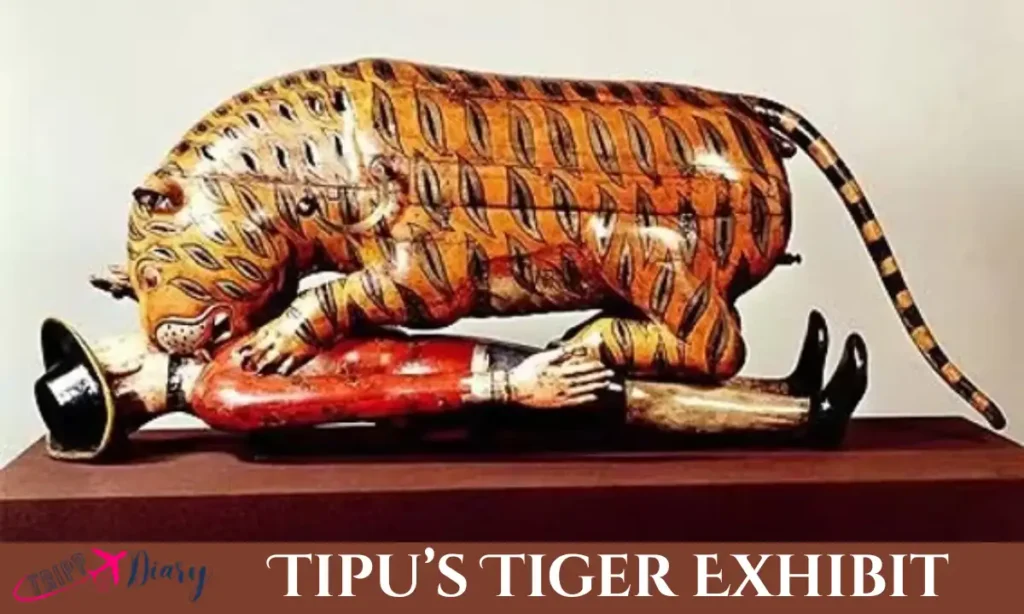
One of the most popular exhibits at the palace is Tipu’s Tiger, which is a mechanical toy in lifesize proportions and represents a tiger tearing apart a British soldier. This icon of defiance is something that no tourist should miss.
Highlights and Features
- It is a mechanical automaton. Its tiger moves its head and makes noise like that of an actual tiger.
- Represents Tipu Sultan’s strong resistance to British colonial forces.
- The mechanical engineering feat is a masterpiece of the 18th century, as it is a blend of art and technology.
Visitor Insight
Tipu’s Tiger is a favorite among photographers and one of the talking points for visitors interested in the military history of Mysore. Not to forget the fact that Tipu Sultan displayed immense courage and intellect while battling the British.
4. Royal Artifacts and Museum Section
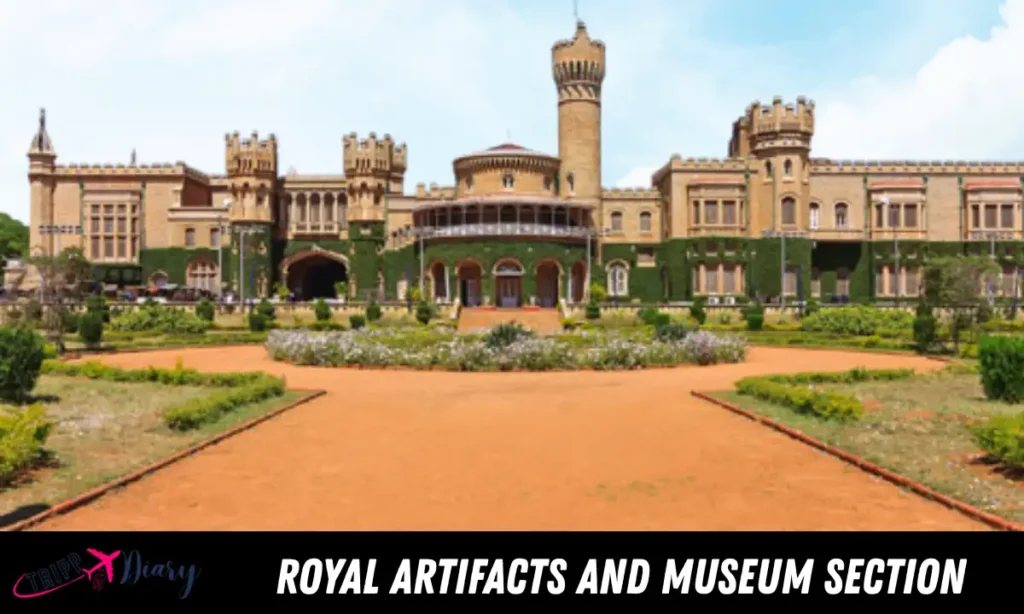
The palace currently contains a museum that has exhibits of Tipu Sultan’s personal belongings and artifacts.
Highlights and Features
- Weapons: These include swords, guns, and other kinds of arms that Tipu Sultan and his army used.
- Costumes and Coins: Traditional royal costumes, robes of ceremony, and coins which represent the economic history of Mysore.
- Paintings: Battle scenes, court gatherings, and Tipu Sultan’s life and military campaigns.
Visitor Insight
The museum offers a detailed history of the royal past of Mysore. Every artifact in the museum has a history to it, so it’s an educational tour for students, historians, as well as tourists.
5. Balconies and Wooden Architecture

Tipu Sultan’s Summer Palace is known for one such unique feature in the form of a wooden architecture style, which is a rarity in southern parts of the state, where predominantly structures made of stones are found in abundance.
Highlights and Features
- The teakwood pillar and arches portray the skill of the Mysore craftsmen.
- The walls and ceiling of the room have hand-painted floral motifs.
- The balconies on the upper floor provide panoramic views of the palace grounds and gardens.
- The architectural design of the palace highlights symmetry, equality, and beauty in line with Tipu Sultan’s aesthetic taste.
Visitor Insight
Walking along these balconies, one is able to enjoy the engineering ingenuity and artistic perfection of the 18th century. This is a perfect place for taking pictures of the detailed designs of the palace.
Visitor Tips for Tipu Sultan’s Summer Palace
- Timings: 8:30 AM – 5:30 PM daily.
- Entry Fee: Approximately ₹20 for Indian citizens; foreign tourists: more expensive.
- Best Time to Go: October to February, during the pleasant time of the year.
- Nearby Attractions: Together with Bangalore Palace, Lalbagh Botanical Garden, and Tipu Sultan’s Fort, a comprehensive historical tour can be carried out.
- Guided Tours: Avail the services of a local guide to engage in quite fascinating stories and historical contexts regarding Tipu Sultan and his era.
Conclusion
Tipu Sultan’s Summer Palace is much more than an historical landmark; it is a thriving testimony to the royal richness of India, architectural expertise, and defiance against foreign powers. From Durbar to Tipu’s Tiger, every nook of Tipu’s Summer Palace speaks of an unspoken tale.
Also read about: Fun World Bangalore Ticket Price: Location, Attractions, Timings & Best Time to Visit