
Key Highlights
Here’s what you need to know about choosing the best screw-in tent pegs for your adventures:
- Screw-in tent pegs provide unmatched holding power, especially in challenging ground conditions like loose sand or rocky terrain.
- They offer superior ease of use, allowing for effortless setup and removal with a cordless drill.
- There are different types of tent pegs designed specifically for various terrains, from soft ground to hard, rocky soil.
- Made from durable materials like stainless steel, these pegs are built to last and resist harsh weather.
- Upgrading to screw-in pegs gives you peace of mind, ensuring your tent or awning stays secure.
Introduction
Few things ruin a camping trip faster than a collapsed tent. Secure your shelter with quality tent pegs—especially screw-in pegs, which offer superior stability compared to traditional options for your next adventure. With the right gear, you can relax and enjoy the outdoors worry-free.
Understanding Screw-In Tent Pegs
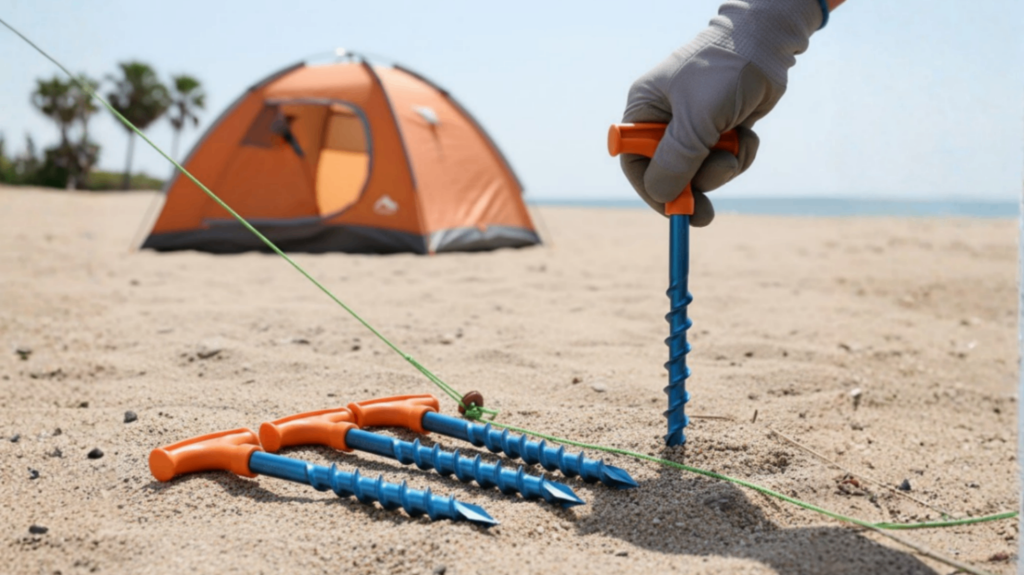
When you move beyond basic tent pegs, you’ll find screw-in pegs—designed to anchor your tent, caravan awning, or privacy screen much more securely. Knowing how they differ from traditional pegs is key to a stable, hassle-free camping experience.
The right pegs can dramatically improve your setup. Below, we’ll examine what sets screw-in pegs apart and how they compare to standard options.
What Are Screw-In Tent Pegs and How Do They Work?
Screw-in tent pegs, or screw pegs, have threaded shafts that you twist into the ground instead of hammering, creating a kind of cone shape as the threads grip soil, sand, or gravel for a much stronger hold than smooth stakes.
A cordless drill with a socket adapter makes setup quick and effortless, but a spanner works too. The larger surface area provides excellent grip, keeping the right tent pegs secure under tension—ideal for windy conditions. When choosing screw pegs, consider the material, length, and thread design to match your camping environment.
Key Differences Between Screw-In and Traditional Tent Pegs
Screw-in pegs offer a clear advantage over traditional pegs in both performance and convenience. While traditional steel or plastic pegs rely on friction and often fail in hard or soft ground, common sense dictates that screw-in pegs actively grip the soil, making them far more effective—especially on tough terrain where regular stakes bend or can’t penetrate. Using a drill also makes installation and removal much easier.
Key differences: Holding Power: Screw-in pegs’ threaded design creates a stronger hold. Installation: Screw-in pegs use a cordless impact wrench or drill for quick setup; traditional pegs need a hammer. For ultralight backpacking, some manufacturers offer screw-in tent pegs made of lightweight materials like aluminum or titanium, designed to balance weight savings with holding power. These pegs can still be installed with a cordless impact wrench and are recommended for situations where minimizing pack weight is essential without sacrificing secure anchoring.
- Holding Power: Screw-in pegs’ threaded design creates a stronger hold.
- Installation: Screw-in pegs use a cordless impact wrench or drill for quick setup; traditional pegs need a hammer.
- Terrain Versatility: Screw-in pegs work well in hard, rocky, or very soft ground where others don’t.
- Removal: Simply reverse the drill to remove; no struggling with stuck stakes.
Advantages of Choosing Screw-In Tent Pegs for Camping
Screw-in tent stakes offer strong holding power, keeping your shelter secure in any weather. Their reliability gives you peace of mind, so you can enjoy camping without worrying about your gear.
Built for durability and weather resistance, these pegs provide superior grip and robust construction—making them a smart upgrade for serious campers.
Superior Holding Power in Challenging Ground Conditions
Screw-in tent pegs, like steel tent pegs, provide superior holding power over traditional pegs. Their spiral threads anchor firmly, preventing them from loosening—even in strong winds.
They excel on tough terrain: gripping gaps in rocky ground and offering stability in sand or soft soil where straight pegs can’t hold.
Heavy-duty screw-in pegs penetrate deeply and resist upward force, keeping your tent stable and secure during storms.
Weather Resistance and Durability Benefits
Durability is crucial when choosing camping gear, and screw-in tent pegs, including aluminum stakes, are built to last. Made from materials like stainless steel or reinforced nylon, they resist bending, rust, and harsh weather, unlike cheaper alternatives.
Stainless steel stands out for its corrosion resistance and strength, easily handling drill torque without breaking or warping. This means your pegs will perform reliably trip after trip.
Their sturdy construction also improves stability, ensuring your setup stays secure even in tough conditions. Strong materials and a solid design give you confidence that your tent will hold up in any weather.
Types and Materials of Screw-In Tent Pegs
Not all screw-in pegs are the same. They come in different materials and sizes for specific uses, often tested through dozens of design prototypes. While plastic or aluminum pegs are common, steel options are usually the most dependable. Knowing these differences helps you choose the right peg.
Select material and size based on your camping style, ground type, and shelter size. We’ll explain common materials and help you pick the best length for your needs.
Common Materials Used and Their Durability
Screw-in tent pegs are made from stainless steel, regular steel, reinforced nylon, or plastic, and steel pegs are well-known for their strength. Stainless steel offers the best strength and rust resistance for long-term use. Reinforced nylon adds toughness without extra weight. Cheaper plastic pegs are lightweight but weak on hard ground and can become brittle. Regular steel is strong but rusts if not maintained. Top brands often back their materials with lifetime warranties.
| Material | Durability | Best For |
| Stainless Steel | Excellent | All conditions, especially hard ground and harsh weather |
| Reinforced Nylon | Very Good | Tough, flexible parts |
| Regular Steel | Good | General use; needs rust protection |
| Plastic | Fair | Soft ground, light-duty only |
Sizes and Lengths—Which Is Right for Your Tent or Awning?
Choosing the right size and length of screw-in tent pegs, including plastic tent pegs, is as important as selecting the material. Peg length depends on ground type and shelter size—longer pegs are best for soft ground to reach stable layers.
Large tents, awnings, and canopies need longer, stronger pegs for a secure hold against wind and strain. Sand pegs are extra-long with wide threads to grip loose sand.
Short, heavy-duty pegs work well in rocky or hard ground. Lighter pegs suit small tents in mild conditions. Always match your peg to the ground type and load requirements.
Performance on Different Terrains
The true test of a tent peg is its performance on various terrains. Screw-in pegs stand out, anchoring securely in soft soil, loose soil, loose sand, and hard or rocky ground. Their versatility makes them perfect for campers traveling to diverse locations.
Unlike standard pegs, which suit limited conditions, screw-in pegs handle a wide range of surfaces. Here’s how they work on different terrains to help you choose the best set of guy ropes for your next trip.
How Screw-In Tent Pegs Perform in Sand, Grass, and Gravel
Screw-in tent pegs are ideal for various terrains like sand, grass, and gravel—if you choose the right type. Standard pegs have little grip in soft soil or sand and pull out easily, while screw-in pegs provide enhanced stability.
Screw-in sand pegs feature long shafts and wide threads, letting them dig deep and anchor securely in loose ground—a must for beach camping.
For grass, dirt, and gravel, general-purpose or heavy-duty screw-in pegs work well:
- Sand/Soft Soil: Use long pegs with wide threads for strong grip.
- Grass/Dirt: Standard or heavy-duty screw-in pegs hold firmly.
- Gravel: Heavy-duty pegs penetrate loose rock to reach solid ground.
Effectiveness on Hard or Rocky Ground
Screw-in tent pegs outperform traditional stakes on hard or rocky ground. Hammering standard pegs into tough soil often bends them and causes frustration, as blunt tips can’t penetrate well. Rock pegs, on the other hand, can be a great alternative in these conditions.
Heavy-duty screw-in pegs, especially with a cordless drill or impact wrench, easily anchor into cracks and crevices, securing your tent where other pegs fail.
This reliability means you no longer need to search for soft ground or tie guy lines to rocks and trees—you can pitch your tent exactly where you want.
Tips for Selecting the Best Screw-In Tent Pegs for Your Needs
Now that you know the benefits, it’s time to choose the best tent pegs for your kit. Consider your camping location, what needs securing, and features that signal quality. You may want to consider investing in different models of pegs to ensure versatility. The right pegs are an investment in safety and comfort.
With many options available, knowing what to look for is essential. These tips will help you identify reliable screw-in pegs and trusted brands for dependable camping gear.
Features to Consider for Various Camping Environments
When selecting screw-in tent pegs, match the peg design to the ground type—pegs for sand won’t work well on rock. Prioritize durable materials like heavy-duty steel for strength and longevity.
Key features to consider:
- Material: Stainless steel offers superior durability and corrosion resistance.
- Length & Thread: Use longer, wide-thread pegs for soft ground; shorter, sturdy pegs for hard surfaces. It’s a good idea to choose the right length for the terrain you are working with.
- Head Design: Hex heads are compatible with drills or spanners.
- Tip: Pointed tips penetrate tough soil easily.
- Collar/Hook: A strong collar or hook keeps guy lines secure.
Finding Reliable Brands and Products for U.S. Campers
Finding reliable camping gear brands is essential. The best brands provide clear product information, strong customer support, and back their products with lifetime warranties—signs of quality and durability.
A solid return policy also reflects confidence in their gear. Look for detailed product descriptions that specify materials and intended terrains; avoid brands with vague claims.
Tips for finding reliable brands:
- Choose companies specializing in heavy-duty camping or caravanning gear, avoiding those simply aiming for a fast buck.
- Look for a lifetime warranty or strong satisfaction guarantee.
- Check that products use quality materials like stainless steel.
- Prefer brands offering models suited to different terrains.
Conclusion
In conclusion, the right screw-in tent pegs can greatly improve your camping experience by offering superior stability and security. Their strong grip on various terrains keeps your tent secure in different places and any weather. When choosing pegs, focus on material durability, size, and ease of use. Investing in quality screw-in pegs means more peace of mind outdoors. Ready to upgrade your gear? Check out our top recommendations or get a free consultation to find the best products for your needs.