
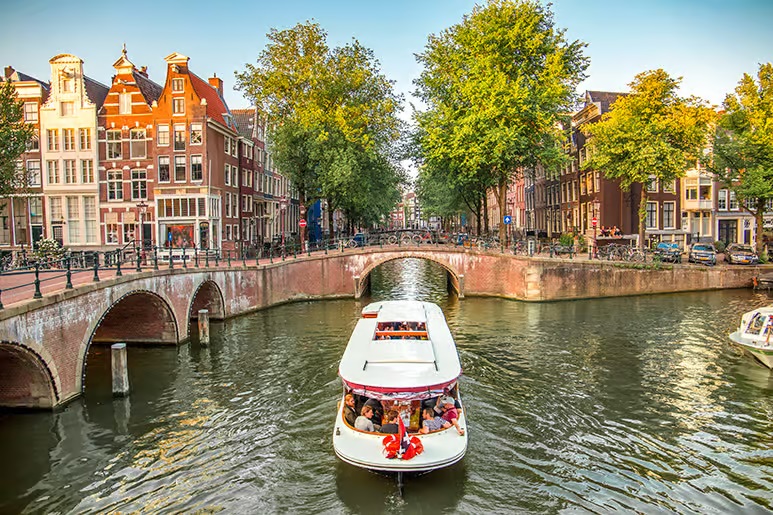
Amsterdam’s canals are more than a scenic backdrop for photos. They form the historic backbone of the city, shaping how people have lived, traded, and moved for over four centuries. Understanding the canal system adds a layer of appreciation that most visitors miss when they only see the water from a bridge.
The Canal Ring and Its Origins
The concentric canals that wrap around the city center, known locally as the grachtengordel, were dug in the seventeenth century during a period of rapid expansion. Merchants needed a way to transport goods efficiently while also creating desirable addresses for the wealthy. The result was a ring of waterways lined with narrow townhouses, each designed to maximize street frontage while minimizing property tax, which was calculated based on width rather than depth.
This clever bit of urban planning is why so many buildings along the canals lean slightly forward or backward and why staircases inside them are famously steep. The canal ring was added to the UNESCO World Heritage List in 2010, recognizing it as a masterpiece of hydraulic engineering and city design that still functions today much as it did centuries ago.
Why the Water Still Matters Today
Unlike many historic waterways that have become purely decorative, Amsterdam’s canals remain functional. They manage water levels, support houseboats where thousands of residents live year-round, and serve as a transport route for everything from grocery deliveries to wedding parties. Locals often use small boats the way others might use a bicycle, and the water carries a surprising amount of daily traffic.
For visitors, one of the best ways to understand this living relationship between the city and its water is to book a private boat tour Amsterdam residents themselves might recommend, since it allows for a slower pace and the flexibility to linger near spots that interest you rather than following a fixed group schedule. Seeing the architecture from water level also reveals details that are invisible from the street, such as original loading hooks still mounted above former warehouse doors.
What to Look Out For Along the Way
- Gabled houses with decorative tops, each style indicating a different era of construction
- Houseboats, many of which have been in the same family for generations
- Small drawbridges that still open by hand for taller vessels
- Warehouses converted into apartments, recognizable by their extra-wide windows
Paying attention to these details turns a simple ride into a short lesson in urban history, and it becomes easier to picture how the city grew outward ring by ring.
Choosing the Right Way to See the Water
Not every trip on the water needs to be the same. Large sightseeing boats offer a good introduction with recorded commentary, but they can feel impersonal and are often crowded during peak season. A smaller vessel allows for a more personal experience and gives the option to explore quieter stretches away from the main tourist routes.
Timing also matters. Early morning trips offer softer light and fewer crowds, while evening tours let you see the bridges lit up, which is when the canal ring looks its most atmospheric. A canal boat Amsterdam excursion booked outside the busiest midday hours tends to feel calmer and gives more room to appreciate the surroundings without constant boat traffic nearby.
Weather rarely ruins the experience either, since many boats offer covered seating, and rain on the water often makes the reflections of the old buildings even more striking.
Getting the Most Out of Your Time on the Water
A short trip on the canals can shift how you see the entire city afterward. Streets that once seemed like a maze start to make sense once you understand how they radiate from the water. Even a single hour on a boat can offer more context about Amsterdam’s layout than an entire day of walking, simply because the canals were the original organizing structure of the city long before cars or bicycles arrived.