
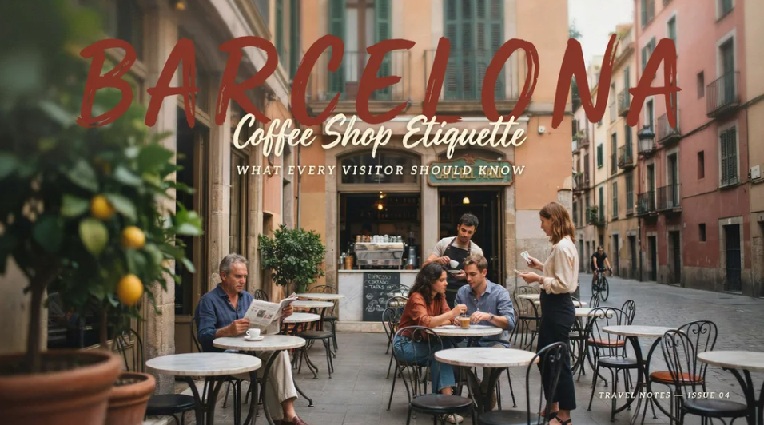
Barcelona seriously embraces coffee culture in all aspects. Whether it is a traditional café in the neighborhood or a trendy specialty coffee shop, local people consider coffee breaks as not just a time for a quick caffeine intake but also the moments to relax, chat, or just enjoy the pace of everyday life.For visitors, understanding Barcelona coffee shop etiquette can make the experience more enjoyable while helping avoid common misunderstandings.
Some places even encourage their customers to get a drink and leave quickly, but the café culture of Barcelona is a perfect balance of efficiency and experience. Knowing a few local customs is a way to naturally blend in and thus enjoy your visit as a local.
Coffee Culture in Barcelona Is About More Than Coffee
First of all, it is quite common that one of the first things that tourists notice is that cafes in Barcelona are not simply places open for consumption but social spaces in which people interact.
Friends get together to chat, office partners talk about work projects, local people stay in touch with the newspaper and at the same time enjoy people-watching for a single cup of coffee.For that reason, the majority of coffee shops have a laid-back mood, particularly when it comes to the time outside the peak hours. Nevertheless, chill does not equal disorder. Consumers normally respect the environment, keep their conversations at a reasonable level, and show both to the staff and other clients.
Besides that, a lot of cafes become a part of the local community to such an extent that the regular clients probably go there everyday. Visitors can learn a lot about local traditions just by watching what is going on and behaving in a manner that earns their respect.
Understand the Difference Between Table Service and Counter Service
A usual mistake of travelers is to think that every coffee shop does things the same way. Actually, in Barcelona, the ways of serving customers differ greatly.
In the old-fashioned coffee houses it would be the norm to sit down and then the waiter/waitress comes to take the order. On the contrary, in the specialty coffee shops, customers usually order and pay first at the counter and then find the seat.
Before deciding on a table, take a moment to watch how the rest of the customers are ordering. If you still have doubts, a very plain question like “¿Pido aquí?” (“Do I order here?”) will do and will also be appreciated.
Noticing and following the café’s mode of operation is a way of showing respect to the personnel and at the same time your help in maintaining service at a reasonable pace will be most valuable, particularly when things are very hectic.
Know What to Order and When
Though Barcelona has plenty of your coffee dream options, the locals typically just stick to the basics. Here are some popular picks:
- Café solo (a single espresso)
- Cortado (espresso with a splash of milk)
- Café con leche (coffee mixed with a good quantity of milk)
- Americano
- Cappuccino, especially in specialty coffee shops
Breakfast time is usually when people are drinking the most coffee. A lot of people in the city like to have their coffee accompanied by some pastry, toast, or a small sandwich.
Ordering a large, complex drink might be less common in regular places. The staff, in most cases, is willing to handle the requests, but knowing local customs might lead to a more pleasant exchange.
Seating Etiquette Matters
Getting a table is an easy task but you might want to consider a few social conventions.
When a café is crowded, try not to use a large table when you are alone. Such tables are likely to be reserved for groups. Also, if seats are scarce, sharing a few seats with you by other patrons is fine but you should not be using them to spread your stuff.
Outdoor areas are a big hit in Barcelona. Sometimes when a number of people want to be served, cafés become selective about customers mainly ordering. What’s more, if you sit there for a long time you may want to think about buying something else.
It is both a way of doing business and at the same time a funny little issue of social interactions.
Using Laptops and Working Remotely
Remote workers and digital nomads are increasingly choosing Barcelona as their spot, which is a contributing factor to the influx of visitors looking for cafes to serve as their workstations.
On the other hand, not all coffee shops are friendly towards customers who stay for hours working on laptops. For instance, some independent cafes have a limited number of seats and depend on customers coming and going throughout the day to be profitable. There may also be some establishments that designate certain areas as laptop-free or restrict computer use during their busy hours.
It is advisable to check the rules that can be seen posted or just get a feel for the place before deciding to stay for several hours. If you happen to be in a small-sized place, ordering one coffee and staying there all afternoon may be frowned upon.
Generally speaking, it is recommended that your support to the café reflects the amount of time you stay there.
Respect Local Payment Practices
Most places in Barcelona will accept card payments but sometimes small bars or coffee shops set a minimum amount for card payments.
Having some cash on you is a good idea as you may find some old- style barrier-free places where you can only pay in cash. Also, when it comes to the pay, it is usually the practice to pay the bill after finishing, especially when the waiter is coming to your table, rather than paying immediately after ordering.
Tipping is seen as good manners but the gesture doesn’t have to be as big in tipping culture in the US. Locals mostly just leave the rounded amount or small coins for very good foodservice.
Knowing these habits will give you the right dose of confidence when making a transaction and will spare you the feeling of not knowing the local customs.
Courtesy Goes a Long Way
It is not necessary to be fluent in Spanish or Catalan to enjoy the cafés of Barcelona. However, a little politeness will go a long way.
Learning some simple Spanish like “Hola, ” “Por favor, ” and “Gracias” will be a real help. The person serving at the café will probably speak English, especially in places catering to tourists, but trying to speak the local language will earn you respect.
Spending time and waiting is also a virtue. You might find the atmosphere in Barcelona cafés to be much more laid-back as compared to some other countries. Especially during peak hours, one can almost sense the quiet joy of the uninterrupted zeal of the cultural lifestyle.
Generally, when the visitor is nice, a good heartfelt smile is directed at them too.
Enjoy the Experience Like a Local
Learning Barcelona coffee shop etiquette is not about committing a set of rules to memory. It focuses on grasping the whole cultural aspect of the rules. Coffee shops in Barcelona are mainly places for socializing, they serve as local hubs, and the people coming here take a moment to enjoy life at a slower pace.
By acknowledging the seating customs, being aware of how the service is done, making a fair contribution to the business, and being polite to the staff, visitors get a more genuine touch of the local lifestyle. It’s not just about enjoying good coffee, it’s also about experiencing ordinary life in one of the most energetic cities of Europe.
Wandering into a Barcelona café, why not first take a few minutes to watch the scene, get comfortable, and soak up the vibe? Most likely, your visit will change you, and you will love the city and its special coffee scene even more.